



NEWS&EVENTS
Home > News&Events > Company news > Oxidation and collection process of rotary furnace for antimony trioxide production
The core process of antimony trioxide (Sb ? O3) is the oxidation process inside the oxidation furnace, which first melts high-purity metal antimony into antimony liquid and then introduces it into the oxidation furnace system.
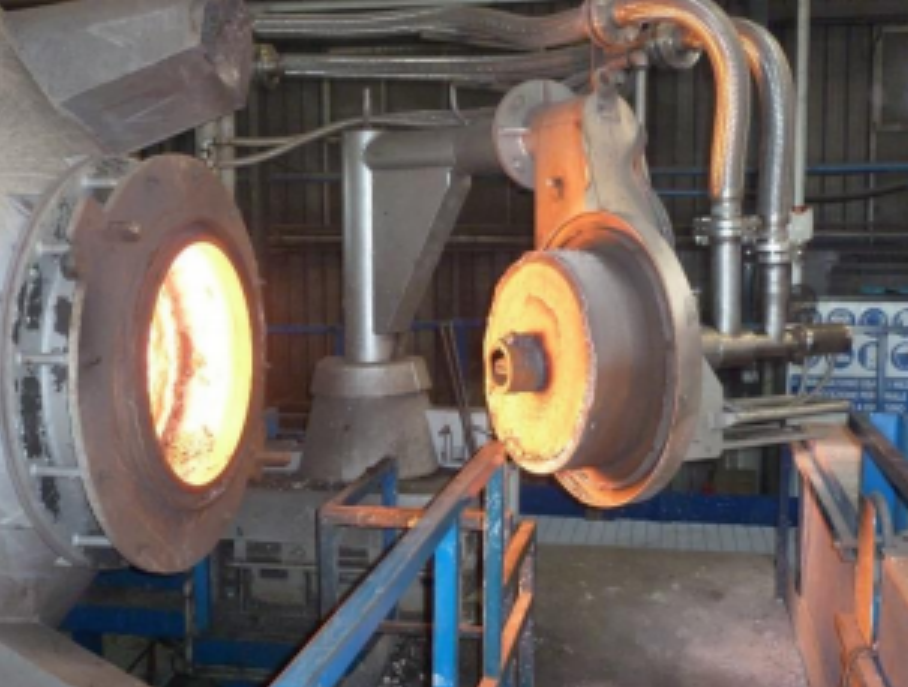
Oxidation process: In the oxidation furnace, antimony liquid is heated at high temperature to evaporate into silver white antimony vapor (Sb), which reacts violently with pre introduced and metered oxygen enriched air or pure oxygen to generate antimony trioxide vapor. The generated antimony trioxide vapor leaves the high-temperature reaction zone with the airflow and enters the cooling collection system.
Key condition control:
1. Temperature control: as the core parameter. Low temperature leads to slow volatilization and incomplete oxidation of antimony, which can easily generate intermediate products or cause the product to turn gray in color; If the temperature is too high, some antimony trioxide will further oxidize, affecting the purity and whiteness of the product and increasing furnace lining losses. Usually, the temperature in the oxidation zone is stabilized at around 1000 ° C to achieve rapid and complete oxidation of antimony.
2. Oxygen supply control:
Flow rate and ratio: It is necessary to accurately calculate and adjust the oxygen (or air) flow rate to maintain the optimal stoichiometric ratio with antimony vapor generation (slightly excessive). Insufficient oxygen, incomplete oxidation, and decreased product purity; Excessive oxygen is uneconomical. If air is used, it will introduce too much nitrogen, dilute the reaction gas, affect collection efficiency, and increase system energy consumption.
Mixing and Turbulence: Reasonably design the furnace structure and air inlet method to ensure that oxygen and antimony vapor are fully and uniformly mixed, forming turbulence, enabling rapid and thorough oxidation reactions, and avoiding local oxygen deficiency.
3. Atmosphere and cleanliness: The oxidation reaction system maintains a slight positive pressure to prevent impurities from being introduced by the backflow of external air. All intake air is strictly filtered to ensure no dust or other pollutants, ensuring that the product is high-purity "antimony white".
By precisely regulating the above conditions, it can be ensured that antimony vapor is fully and efficiently oxidized into pure antimony trioxide vapor, laying a solid foundation for obtaining high-purity and high whiteness antimony trioxide products through quenching and bag dust collection in the future.