



NEWS&EVENTS
Home > News&Events > Company news > Treatment plan for damaged lining of antimony electrolysis equipment
Damage to the lining of an antimony electrolysis cell, such as a tear in the PVC lining, can lead to a series of serious problems if not addressed promptly, including electrolyte leakage, production safety issues, and product quality concerns. The following steps should be followed for proper handling.
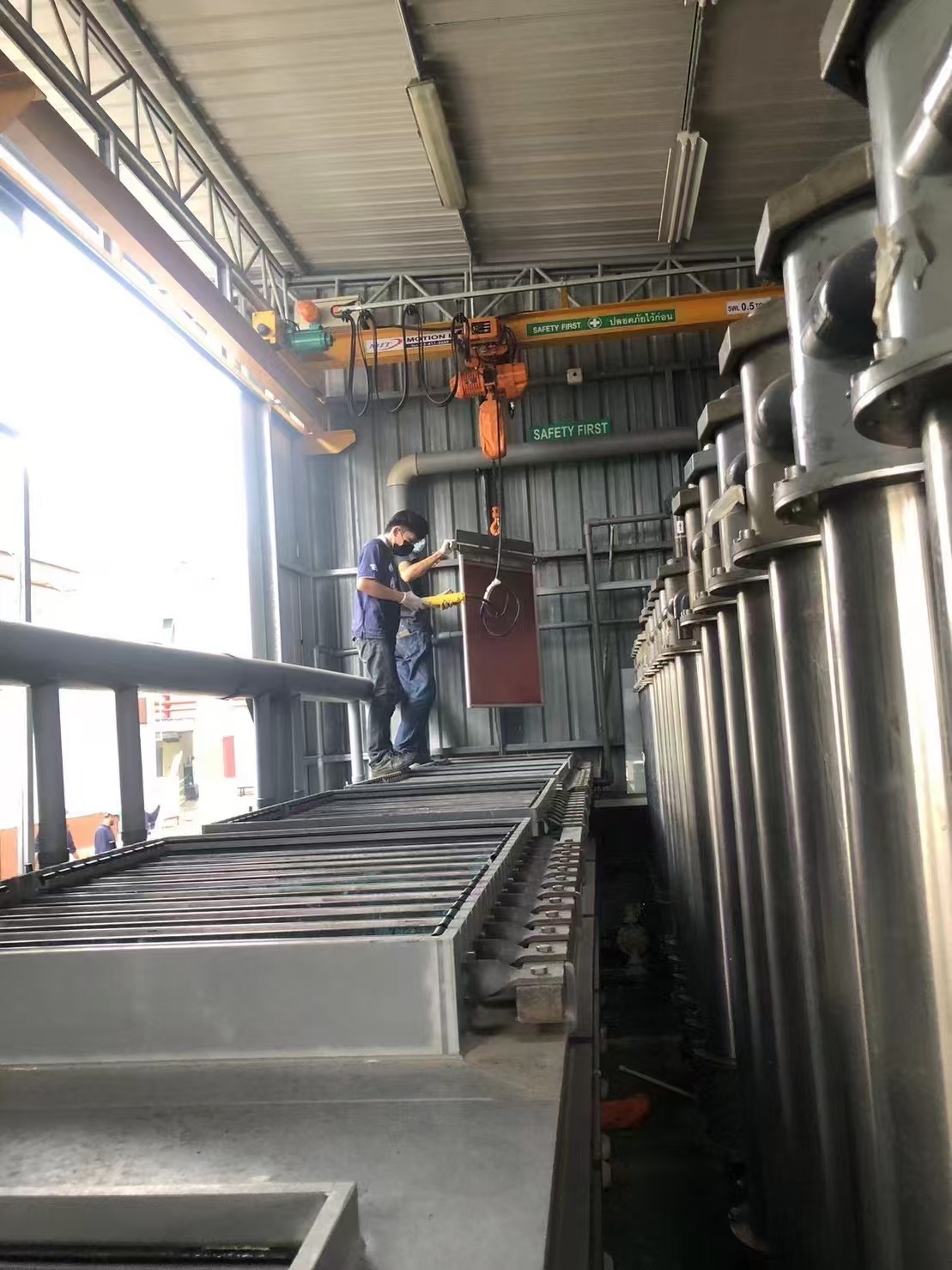
I. Immediate isolation
Upon discovering damage to the lining, the antimony electrolytic cell should be quickly removed from the electrolysis series, i.e., a "cell removal" operation should be performed. At the same time, the feeding of liquid into the cell should be stopped immediately to prevent continuous leakage of electrolyte, which could cause greater losses and safety hazards.
II. Emptying and Cleaning
Completely drain the electrolyte from the tank, then carefully remove the plates to avoid damage. Next, use appropriate tools and cleaning agents to thoroughly clean away any remaining impurities and electrolyte from the tank, creating favorable conditions for subsequent damage assessment and repair work.
III. Damage Assessment
Carefully examine the size and shape of any damage to the lining, and also check if the concrete substrate has been corroded due to electrolyte leakage. Accurately assessing the extent of the damage is crucial for determining the appropriate repair plan.
IV. Professional Repair
If the damage is minor, hot air welding with PVC welding rods of the same material can be used for repair, ensuring a strong weld and good seal. If the damage is significant or the concrete substrate is corroded, the damaged concrete portion must first be removed, then standard-compliant concrete should be re-poured, and a new anti-corrosion lining should be attached to its surface.
V. Testing
After the repair work is completed, a comprehensive inspection of the repaired area must be carried out using professional electrical spark testing equipment to ensure that there are no pinholes or leaks. Only after passing the inspection can the antimony electrolytic cell be put back into use to ensure stable and safe production.