



NEWS&EVENTS
Home > News&Events > Company news > The difference between antimony ingots and antimony trioxide produced by antimony refining furnace
When antimony refining furnace produces antimony ingots and antimony trioxide, the working principle and the atmosphere in the furnace are fundamentally different.
Antimony ingot production utilizes a reduction refining process, the core objective of which is to remove impurities such as iron, copper, and arsenic from the crude antimony to obtain pure antimony liquid. This process is based on chemical reaction purification and is carried out in a reducing or neutral atmosphere. Refining agents are added to the crude antimony, where they react with impurities to form slag. This slagging reaction gradually accumulates impurities, forming slag. The slag is then scraped from the antimony liquid, purifying the metallic antimony and ultimately producing high-purity antimony ingots.
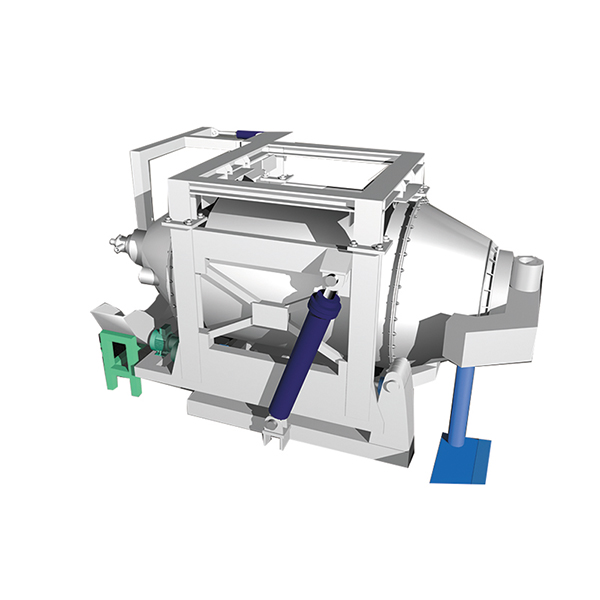
The production of antimony trioxide utilizes an oxidative volatilization process, which oxidizes antimony metal into antimony trioxide and collects it. This process utilizes an oxidation reaction, carried out in a strongly oxidizing atmosphere. In practice, a large amount of air is blown into the antimony liquid, allowing the antimony to fully contact the oxygen in the air and undergo an oxidation reaction to produce antimony trioxide. Because antimony trioxide is highly volatile at high temperatures, it quickly enters the flue gas system in the vapor phase. Subsequently, specialized flue gas treatment equipment separates and collects the antimony trioxide from the flue gas, resulting in the resulting antimony trioxide product.
It can be seen that the two process paths have essential differences in working principles: one is reduction purification and the other is oxidation volatilization; in terms of the atmosphere in the furnace, one is reducing or neutral and the other is strongly oxidizing.