



NEWS&EVENTS
Home > News&Events > Company news > What is the role of the multi-layer design of the refractory lining of the antimony rotary furnace?
The antimony rotary furnace's refractory lining utilizes a multi-layer design. This ingenious structure is designed to achieve a perfect balance between high-temperature resistance, corrosion resistance, thermal insulation, and energy conservation, playing a key role in the furnace's efficient and stable operation.
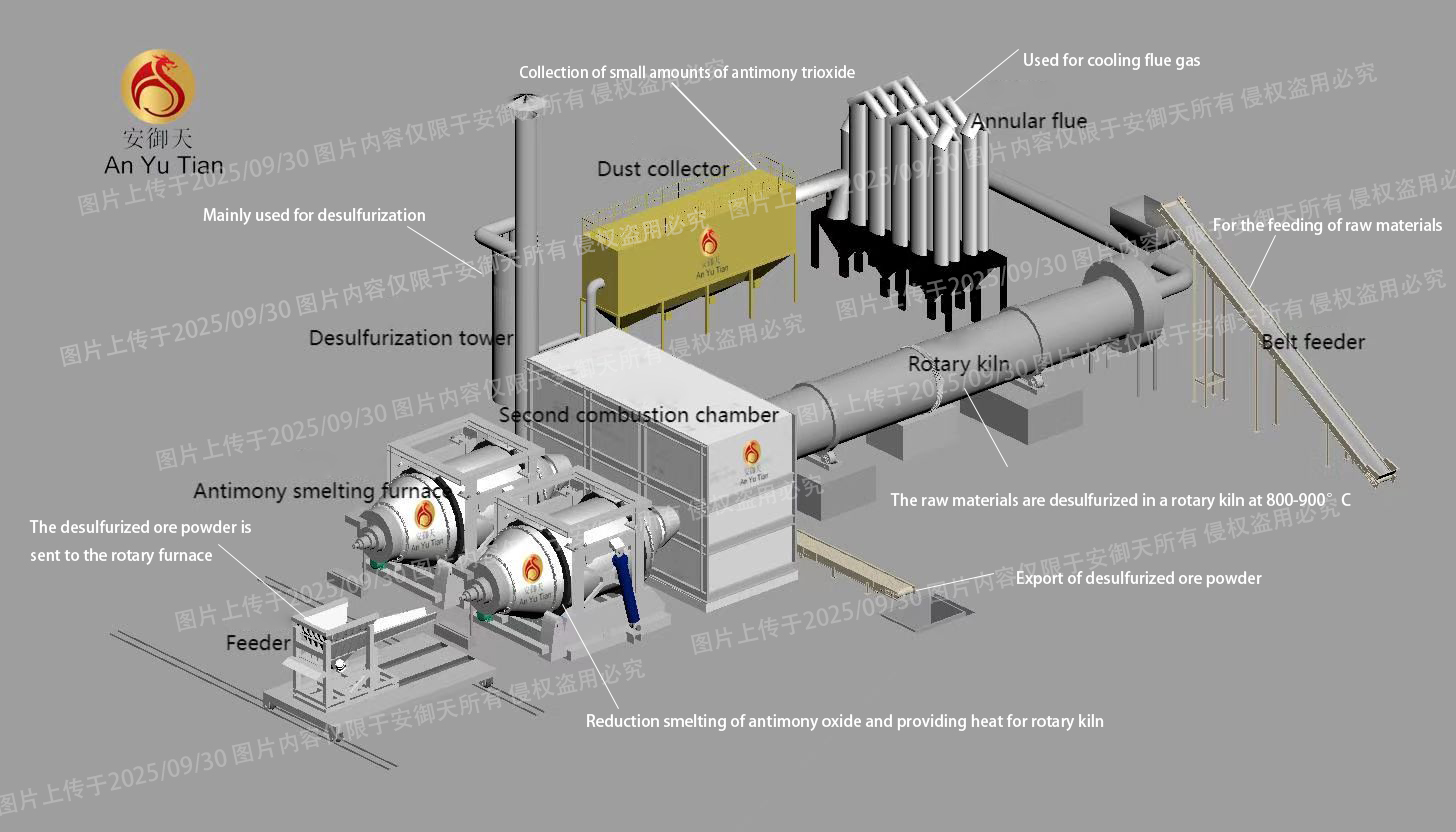
The working layer, located on the innermost side of the refractory lining, comes into direct contact with the hot melt and slag. High-quality materials such as high-alumina bricks or chrome corundum bricks are typically used, offering excellent high-temperature resistance and strong resistance to chemical attack. In the high-temperature, highly corrosive environment of antimony smelting, the working layer effectively resists the various chemical components in the melt and slag, while also withstanding the mechanical wear caused by melt flow. This provides a stable and reliable environment for the internal reactions within the rotary furnace, ensuring smooth smelting.
The insulation layer, located outside the working layer, is primarily composed of lightweight insulating bricks or refractory fibers. Its core function is to reduce heat loss from the furnace. Rotary furnace operation generates significant heat, and the insulation layer acts as a thermal barrier, retaining as much heat as possible within the furnace, improving thermal efficiency and reducing energy consumption. In addition, the insulation layer can effectively reduce the temperature of the outer shell, avoid safety hazards caused by overheating of the outer shell, ensure the safety of operators, and also reduce the damage to the outer shell caused by heat, thereby extending the overall service life of the rotary kiln.
The multi-layer refractory lining, through the synergistic effect of the working layer and the insulation layer, not only ensures the stable operation of the rotary kiln in high temperature and highly corrosive environments, but also achieves the goal of energy saving and consumption reduction. It is an indispensable and important part of the design of antimony rotary kiln.