



NEWS&EVENTS
Home > News&Events > Company news > The two core technological functions of rotary furnace in antimony ingot production
In the production process of antimony ingots from antimony ore, the rotary kiln, as a key piece of equipment, undertakes two core steps: high-temperature reduction smelting and energy supply. It is the industrial core for efficient antimony extraction and ingot formation.
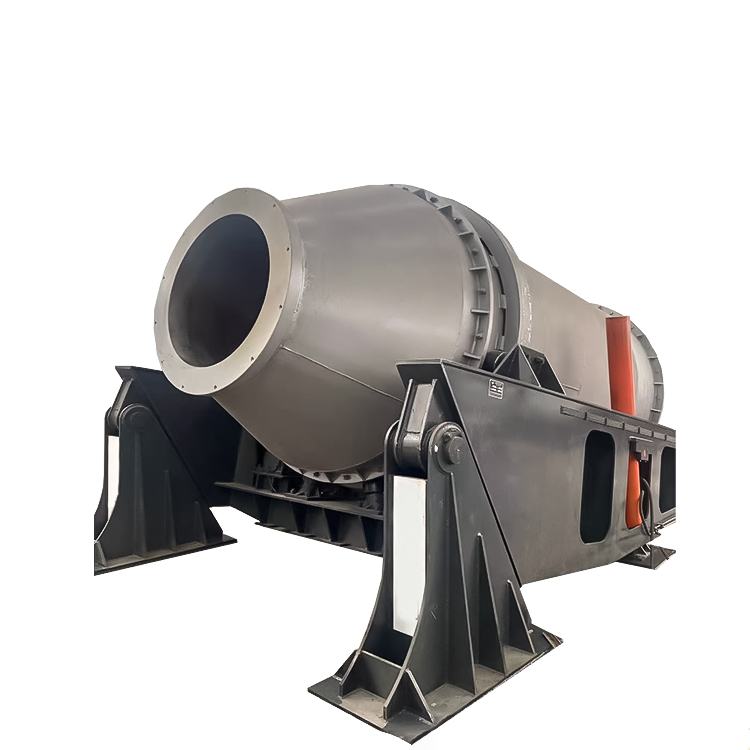
1. High-Temperature Reduction Smelting: The Core Step in Antimony Extraction
The rotary kiln, controlled at a high temperature of 1000-1200°C, mixes desulfurized antimony ore powder with a reducing agent (such as coke) to complete the reduction reaction of antimony oxide (Sb?O?) within the furnace. The material rotates and tumbles within the furnace, fully exposed to the hot air flow. The antimony oxide is reduced by carbon to metallic antimony vapor, which condenses to form crude antimony metal. This process requires precise control of the furnace atmosphere to prevent excessive oxygen from oxidizing the antimony vapor. The rotation speed and tilt angle are also adjusted to ensure material residence time and reaction efficiency.
2. Energy Supply: Ensuring Heat for the Front-End Roasting Process
The rotary kiln generates high-temperature flue gas through a combustion system (such as pulverized coal or natural gas), providing a stable heat source for the roasting process in the front-end rotary kiln. In a rotary kiln, antimony sulfide ore undergoes oxidation roasting at 800-1200°C, removing impurities such as sulfur and arsenic, and producing antimony oxide flue gas. The rotary kiln's heat transfer efficiency directly impacts roasting results. Its refractory lining (such as high-alumina bricks) and intelligent control system enable real-time temperature adjustment to ensure consistent roasted product quality. This thermal gradient utilization significantly improves the overall process's energy efficiency.
Through the synergistic effect of the above two links, the rotary furnace realizes the continuous production of antimony ore from raw materials to metal ingots, combining the advantages of high efficiency, environmental protection and intelligence, and has become the core equipment of the modern antimony smelting industry.