



NEWS&EVENTS
Home > News&Events > Company news > Process Selection for Producing Electrolytic Copper from Copper Oxide Ore
Copper oxide ore is an important source of metallic copper. Its smelting processes are primarily categorized into two main types: pyrometallurgical and hydrometallurgical. Each process has its own unique characteristics, and the choice of which one to use requires a comprehensive balance between ore properties, economic costs, and environmental requirements.
Pyrometallurgy is a traditional and well-established process, primarily comprising roasting, smelting, converting, and refining electrolysis. Its advantages lie in its reliable technology, high processing capacity, and short production cycles, making it particularly suitable for processing high-grade copper oxide ores. However, this process is energy-intensive, and the high-temperature smelting process produces large amounts of sulfur oxide fumes and solid waste, making it environmentally unfriendly. Furthermore, it is not economically viable for processing low-grade ores.
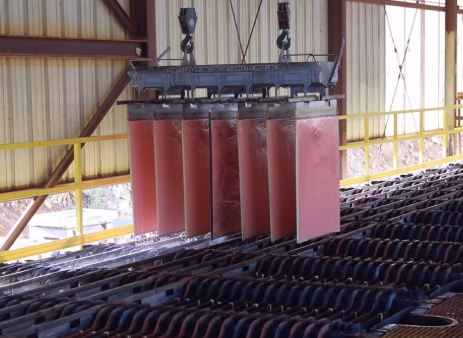
Hydrometallurgy offers another path, with a typical process including leaching, extraction, and electrowinning. It directly dissolves copper from the ore using chemical solvents at room or medium temperatures, then enriches and purifies it through solvent extraction, ultimately obtaining high-purity cathode copper through electrowinning. The hydrometallurgy process consumes significantly less energy than the pyrometallurgical process, emits less waste gas, is more environmentally friendly, and can economically process low-grade, complex, and difficult-to-process copper oxide ores. However, its disadvantages are high chemical reagent consumption, a lengthy process, and sensitivity to the mineralogical composition of the ore.
In summary, pyrometallurgical and hydrometallurgical processes coexist in the current industry, each suited to different resource conditions and market environments. Continuous technological innovation is driving the copper smelting industry toward greater efficiency, energy conservation, and environmental sustainability, providing solid support for the sustainable use of resources.