



NEWS&EVENTS
Home > News&Events > Company news > Why is hydrometallurgy suitable for processing low-grade copper oxide ores?
With copper resources becoming increasingly scarce, the efficient utilization of low-grade copper oxide ores is crucial. Hydrometallurgy, with its unique advantages, has become an ideal method for processing such ores. Hydrometallurgy offers significant advantages in processing low-grade copper oxide ores, primarily due to the following reasons.
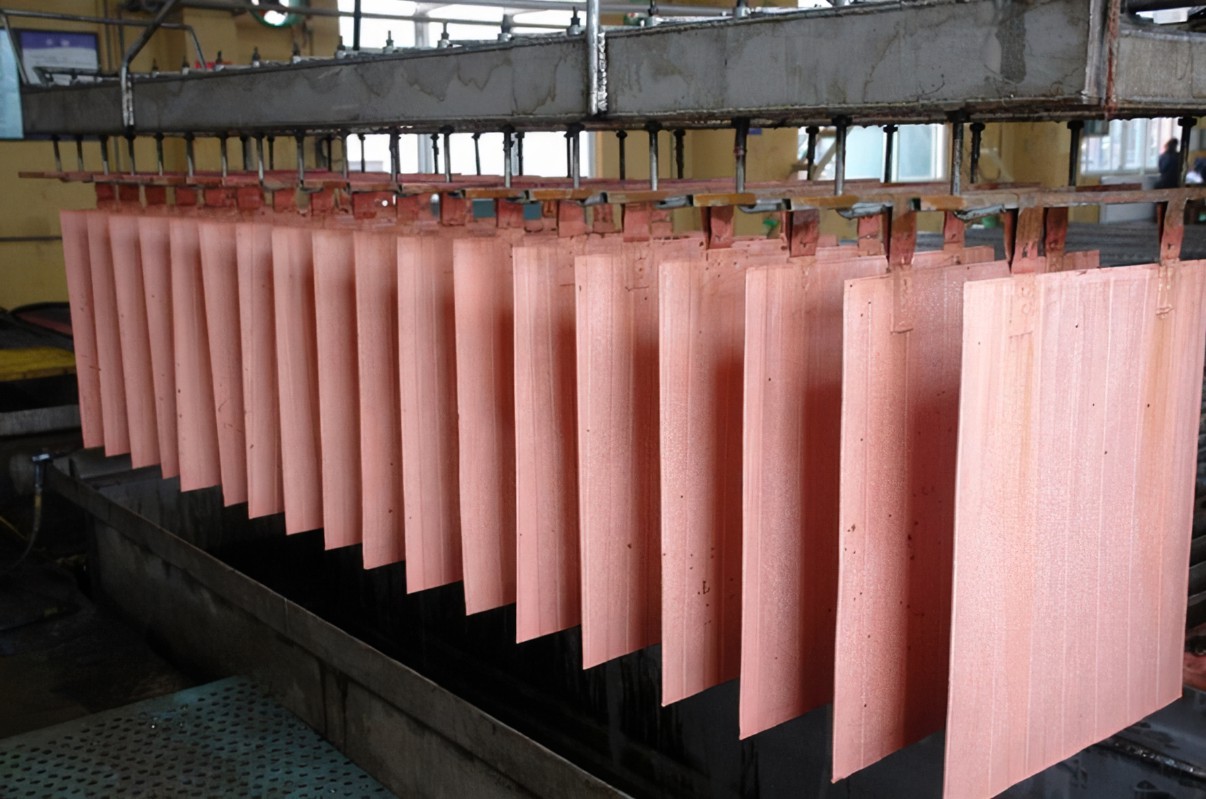
1. Selective Dissolution and Efficient Recovery
The core of hydrometallurgy lies in the selective dissolution of copper from ore using chemical solvents, such as dilute sulfuric acid. This characteristic enables exceptional efficiency in processing low-grade copper oxide ores. Even with low copper content in the ore, the chemical solvents can precisely identify and dissolve copper, forming a copper-containing solution. Subsequently, a series of processes are used to recover metallic copper from this solution, achieving efficient extraction of copper resources from low-grade ores.
2. Elimination of Complex Mineral Processing, Simplified Processing
The elimination of mineral processing is another significant advantage of hydrometallurgy. Conventional metallurgical methods often require prior mineral processing and enrichment, which is complex and costly. Hydrometallurgy, on the other hand, can directly process raw ore, eliminating the need for beneficiation, significantly simplifying the production process and improving overall efficiency.
3. Extremely Low Energy Consumption and Significant Cost Advantages
Hydrometallurgy offers significant advantages in terms of energy consumption. Compared to pyrometallurgy, which requires high-temperature smelting, hydrometallurgy operates at ambient or lower temperatures, consuming significantly less energy. This effectively reduces production costs and makes it more economically viable when processing low-grade ores.
4. Environmentally Friendly and Compliant with Environmental Requirements
Amidst increasingly stringent environmental regulations, the environmental friendliness of hydrometallurgy is highly sought after. Its production process produces fewer pollutants, minimizing its environmental impact and aligning with the concept of sustainable development.
5. Maximizing Resource Utilization
Not only can it extract copper from ore, it can also comprehensively recover other valuable metals, improving resource utilization and fully realizing the value of low-grade copper oxide ores.
In summary, hydrometallurgy, with its high efficiency, energy conservation, environmental friendliness, and resource-friendliness, is particularly suitable for processing low-grade copper oxide ores, providing an important technological approach for the development and utilization of lean mineral resources.