



NEWS&EVENTS
Home > News&Events > Company news > Process flow of tin ore smelting by rotary furnace pyrometallurgy
In the production of metallic tin, rotary furnace pyrometallurgy is a mature and important process. Like a sophisticated industrial chain, it transforms ordinary tin ore into high-purity metallic tin.
Raw material preparation is the cornerstone of the entire process. Tin ore must first be crushed and screened to a suitable particle size for subsequent processing. Next, roasting is a crucial step. Under high temperatures, volatile impurities such as sulfur and arsenic are ruthlessly removed from the ore, gradually transforming the originally complex ore into relatively pure tin oxide (SnO?). The ore's grade is significantly improved, providing high-quality raw material for subsequent smelting.
The batching and mixing process requires precise proportions. Pre-treated tin ore must be mixed with a reducing agent and flux (such as limestone) in strict proportions. The reducing agent reduces tin oxide to metallic tin during smelting, while the flux helps lower the melting point of the slag and facilitates the separation of impurities. A uniform mixture of these creates optimal conditions for subsequent smelting.
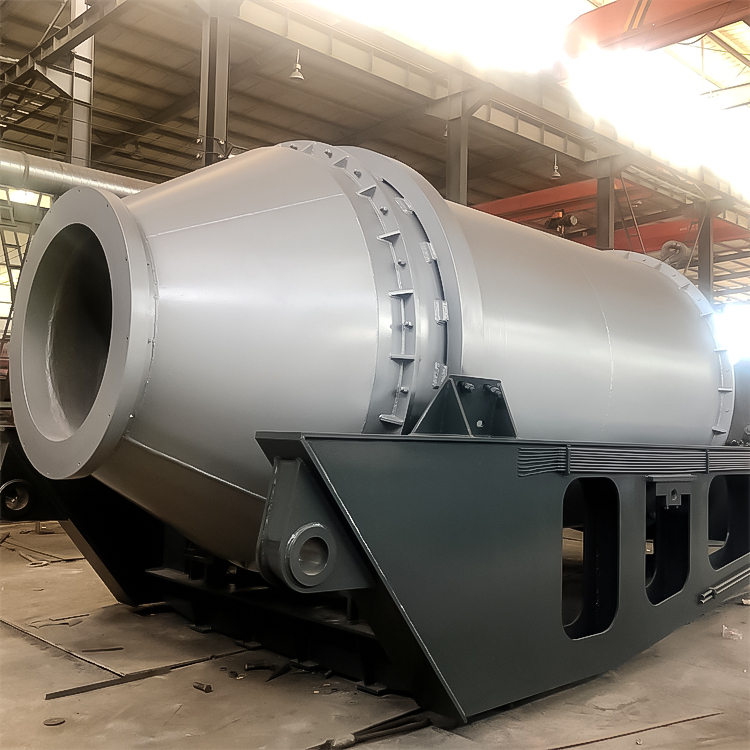
The rotary kiln is the core process. The mixed materials are fed into the rotary kiln for reduction smelting at high temperatures. The continuous rotation of the rotary kiln ensures thorough mixing and even heating of the materials, acting like a giant blender. Optimal smelting results are ensured by precisely controlling parameters such as furnace temperature, reducing agent dosage, and smelting time.
After smelting, the crude tin and slag separation phase begins. The melt in the rotary furnace is discharged, and separation equipment is used to separate the crude tin and slag. The crude tin can be further refined to remove any remaining impurities, ultimately yielding high-purity metallic tin for widespread use in industries such as electronics and chemicals. The slag, on the other hand, is not wasted and can be used as a byproduct for comprehensive utilization or proper disposal, maximizing resource utilization.