



NEWS&EVENTS
Home > News&Events > Company news > The core technology and advantages of rotary furnace smelting tin ore
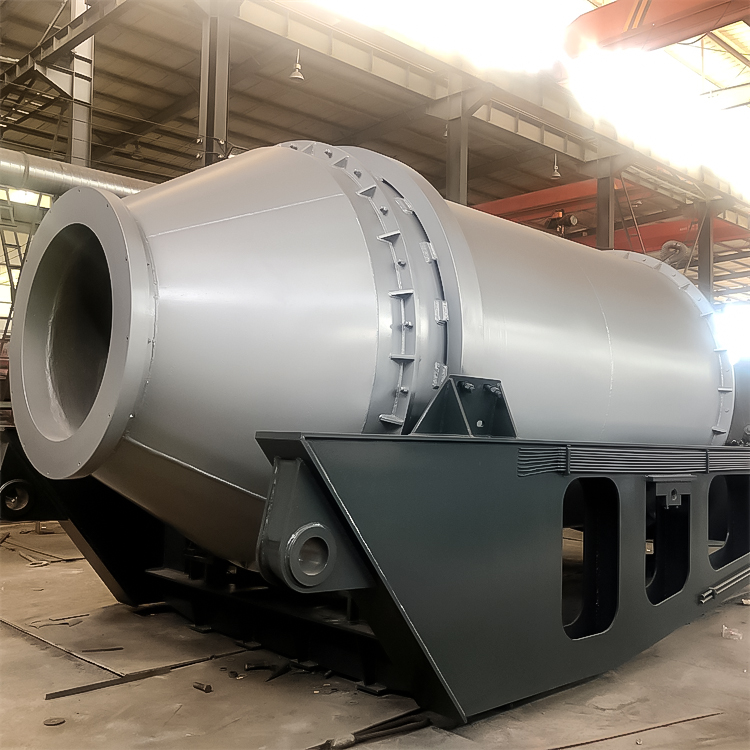
Tin is an important strategic metal, widely used in electronic solder, tinplate, chemical industry and other fields. Its smelting process is very critical. The rotary furnace has become the core equipment of modern tin smelting. The smelting of tin ore in the rotary furnace is a continuous dynamic process. The core process is divided into three steps:
The first step is pretreatment and batching. Mined tin ore (primarily cassiterite, SnO?) undergoes crushing, grinding, and beneficiation to produce a high-tin concentrate. The concentrate is then precisely mixed with an appropriate amount of reducing agent (anthracite or coke), flux (limestone, quartz, etc.), and return material. The flux reacts with the gangue to produce a fluid slag, lowering its melting point and viscosity.
The second method is reduction smelting. The mixed material is continuously fed into a low-speed rotary furnace via a feeding system, where it comes into full contact with the high-temperature flame. At temperatures of 1200-1350°C, a reduction reaction occurs: SnO? + 2C → Sn + 2CO↑. Solid tin oxide becomes liquid crude tin, and the gangue and flux form slag, which naturally separates due to their density differences.
The third is discharge and subsequent treatment. The tilting structure and rotation function of the rotary kiln allow the products to be discharged from different outlets. The crude tin is discharged from the tin outlet for refining, and the slag is discharged from the slag outlet. The trace tin is recovered through fuming treatment.
The advantages of rotary furnaces are obvious: efficient smelting, uniform heating of materials, and large processing capacity; high recovery rate, with a total recovery rate of over 98%; strong fuel adaptability and controllable operating costs; high degree of automation, stable production, and low labor intensity; environmental protection and energy saving, good airtightness, and waste heat recyclable.
The rotary furnace smelting process meets the high efficiency, energy conservation, and environmental protection requirements of modern industry, making it an ideal choice for processing tin ore. As a professional manufacturer, we will provide customers with high-quality equipment and comprehensive process solutions.