



NEWS&EVENTS
Home > News&Events > Company news > The functions of the main parts of the antimony electrolytic cell
The antimony electrolytic cell is a core piece of equipment in the antimony electrolytic refining process. Its rational design is crucial for the efficient extraction and purification of antimony. It consists of several key components, each of which performs a unique and indispensable role.
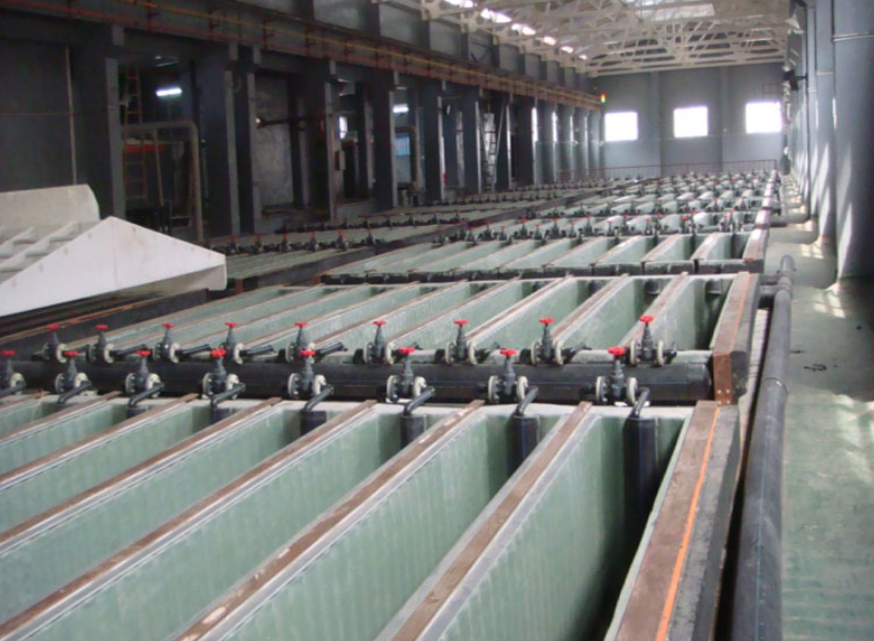
The cell, serving as the main framework of the antimony electrolytic cell, is typically constructed of reinforced concrete. This durable structure is capable of withstanding the various pressures and stresses generated during the electrolysis process. The polyvinyl chloride (PVC) or polypropylene (PP) lining provides critical protection, effectively resisting corrosion from the electrolyte, ensuring long-term stable operation of the cell and providing a reliable environment for the electrolysis reaction.
The anode plate is made of a crude antimony alloy (containing 6%-8% lead). During the electrolysis process, it not only serves as a conductive medium, introducing current into the electrolyte but, more importantly, provides antimony ions, acting as the "source" of antimony electrolysis. The cathode plate, made of pure antimony or titanium-plated stainless steel, provides a site for the antimony ions to undergo reduction reactions under the influence of the electric field, allowing antimony to be deposited and effectively separating it from impurities.
The electrolyte circulation system, consisting of pumps, piping, and heat exchangers, is crucial for maintaining a stable electrolysis process. The pump is responsible for transporting the electrolyte, allowing it to circulate in the tank; the pipes build channels for the electrolyte to flow; and the heat exchanger precisely controls the electrolyte temperature, ensuring uniform electrolyte composition and creating optimal conditions for the electrolysis reaction.
The conductive system connects the cathode and anode to the DC power supply through copper busbars and aluminum flexible strips, ensuring stable and efficient current transmission, so that the entire electrolysis process can proceed continuously and orderly.
In short, the various structural parts of the antimony electrolytic cell work closely together and coordinate to complete the task of electrolytic refining of antimony, providing a solid guarantee for the high-quality production of antimony metal.