



NEWS&EVENTS
Home > News&Events > Company news > What are the precautions for operating electrolytic antimony equipment in low temperature environment?
In a low-temperature environment, the stable operation of electrolytic antimony equipment faces many challenges. To ensure production safety and efficiency, the following precautions are strictly implemented.
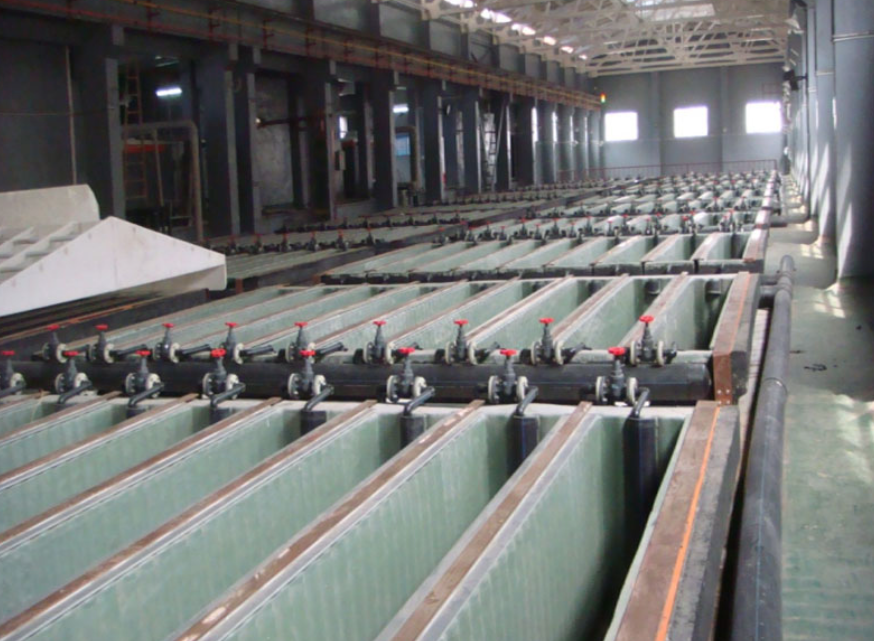
1. Temperature monitoring and control
Real-time monitoring of the temperature of the electrolytic cell and the surrounding environment to ensure that the electrolyte temperature is maintained in the optimal working range of 20℃-35℃. Low temperature may cause the electrolyte resistance to increase and the polarization degree to increase, affecting the electrolytic efficiency of antimony. If the temperature is lower than 20℃, it is necessary to start the heating device or reduce the current density to avoid increased energy consumption and decreased production efficiency.
2. Humidity and condensation protection
When low temperature is accompanied by humidity changes, condensation is likely to occur. Dehumidification equipment needs to be installed to control the humidity between 45%-55% to prevent the circuit board from being damp and short-circuited. Check the sealing of the electrolytic cell regularly to avoid external moisture intrusion.
3. Equipment preheating and startup
Before starting the equipment under extremely cold conditions, the electrolytic cell and power system need to be preheated to gradually increase the internal temperature to a safe range. It is strictly forbidden to start cold equipment directly to prevent the electrode material from being brittle or the seal from failing due to excessive temperature difference.
4. Electrolyte circulation and concentration management
Low temperature will reduce the solubility of antimony ions in the electrolyte, and circulation needs to be strengthened to maintain uniform concentration. Regularly test the electrolyte composition, supplement the anode mud filtrate or wash water, and avoid the quality of cathode sediments deteriorating due to excessive concentration gradient.
5. Emergency plan and inspection mechanism
Formulate a special low-temperature emergency plan and reserve key spare parts such as power supplies and electrodes. Increase the frequency of manual and intelligent inspections, focus on monitoring vulnerable parts such as temperature sensors and power interfaces, and immediately shut down for abnormalities.
6. Equipment maintenance and personnel training
Regularly check the low-temperature adaptability of components such as the electrolytic cell insulation layer and conductive copper rods, and replace aging seals in time. Conduct low-temperature operation training for operators to strengthen safety awareness and emergency response capabilities.
The above measures can effectively reduce the impact of low-temperature environments on electrolytic antimony equipment and ensure production continuity and product quality.