



NEWS&EVENTS
Home > News&Events > Company news > The role of slag filter press in slurry electrolysis of antimony
In the slurry electrolysis of antimony process, the role of slag filter press is mainly reflected in the following aspects:
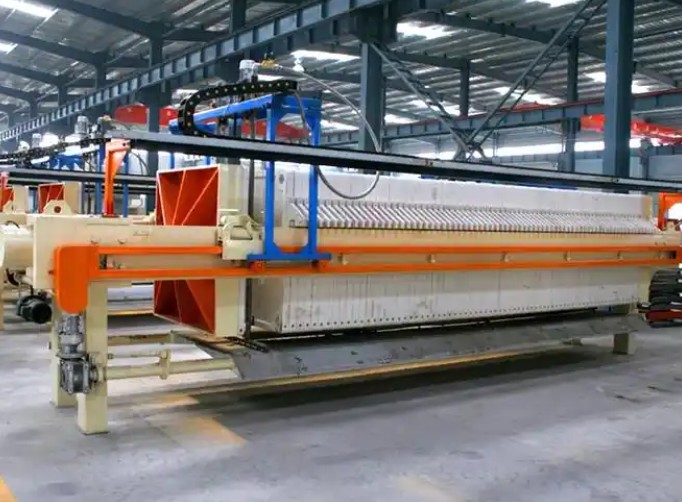
1. Solid-liquid separation: realize efficient separation of slag and electrolyte
Process background: Slurry electrolysis of antimony is a hydrometallurgical technology that extracts antimony directly from slurry by electrolysis. During the electrolysis process, slag (containing unreacted minerals, gangue and impurities) and electrolyte (containing antimony ions, chloride ions, etc.) are mixed to form a slurry.
Function of filter press: The slag filter press uses the principle of pressure filtration to squeeze out the liquid (electrolyte) in the slag through filter cloth or filter plate to achieve solid-liquid separation. The moisture content of the separated solid slag is significantly reduced, and the electrolyte can be recycled and reused.
2. Resource recovery: improve the extraction efficiency of antimony
Electrolyte recovery: The electrolyte separated by the filter press is rich in antimony ions and can be returned to the electrolytic cell to continue to participate in the reaction, reducing raw material consumption.
Slag reduction: The volume of slag after dehydration is greatly reduced (can be reduced to less than 1/3 of the original volume), which is convenient for subsequent treatment or disposal, while reducing transportation costs.
3. Environmental protection treatment: Reduce waste slag discharge and environmental pollution
Waste slag solidification: The filter press converts the slag from a slurry into a solid cake with low moisture content, reducing the fluidity of the slag and reducing the risk of leakage.
Pollution control: Through solid-liquid separation, harmful substances in the electrolyte (such as chloride ions and heavy metals) are prevented from being directly discharged with the waste slag, reducing the pollution of soil and water bodies.
4. Process optimization: key equipment supporting industrial applications
Continuous production: Modern filter presses can realize automated operation (such as automatic compaction and unloading), matching the continuous process of slurry electrolysis of antimony, and improving production efficiency.
Technical adaptability: For the fine-grained slag produced by slurry electrolysis of antimony, the filter press achieves efficient separation through filter cloth pore control (usually micron level) to adapt to complex slag characteristics.
5. Summary
The slag filter press is not only the core equipment for solid-liquid separation in the slurry antimony electrolysis process, but also the key link to achieve efficient resource utilization and environmentally friendly production. Its role runs through multiple levels such as process optimization, cost control and environmental protection, and is of great significance to promoting the industrial application of slurry antimony electrolysis technology.