



NEWS&EVENTS
Home > News&Events > Company news > What are the factors that affect the current efficiency of antimony electrolytic cell?
There are many factors that affect the current efficiency of antimony electrolytic cells, including electrolyte composition, operating conditions, equipment status and process optimization. The following is an analysis from four dimensions:
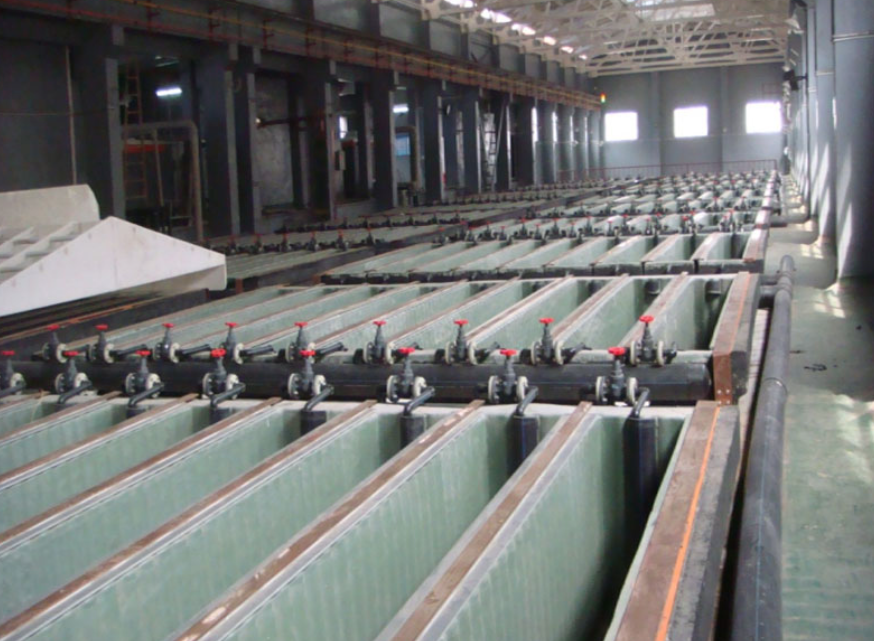
First, electrolyte composition and concentration. The optimal range of antimony ion concentration is 60-80 g/L. When the concentration is low, the antimony ions near the cathode are insufficiently supplemented, the side reactions increase, and the current efficiency decreases; when the concentration is high, the cathode antimony surface is loose and porous, affecting the quality. The increase in sodium sulfide concentration will reduce the limiting current density, promote hydrogen precipitation, and lead to a decrease in current efficiency. It is also necessary to prevent the oxidation of sodium thioantimonite. The recommended mass fraction of sodium hydroxide concentration in the bath is controlled at 32%-35%. Too high will increase the OH? concentration in the membrane and reduce the current efficiency; too low will affect the conductivity of the solution.
Second, the operating parameters are optimized. The current density should match the antimony concentration. When the antimony concentration is high, the current density is set to about 300 A/m2, and when it is low, it is reduced to about 100 A/m2. Too high will increase the cell voltage, loosen the cathode antimony surface, and dissolve impurities at the anode; too low will reduce the efficiency due to the decrease in cell temperature. Large voltage fluctuations will increase energy consumption and heat accumulation, affecting rectification efficiency, and the power supply needs to be kept stable. The cell temperature needs to be maintained above 40°C. Too low a temperature will reduce the mobility of antimony ions and increase side reactions; too high a temperature will accelerate equipment corrosion and increase energy consumption.
Third, equipment and maintenance. Damage or contamination of the ion membrane will cause the cell voltage to rise and the current efficiency to decrease. The membrane resistance needs to be regularly tested and the aging membrane needs to be replaced. The electrolytic cell should be insulated from the ground, and the performance of the insulating material should be checked regularly. Calcium and magnesium ions need to be controlled below 20 μg/L, otherwise the ion membrane will be blocked; impurity ions such as arsenic, tin, and mercury may be preferentially precipitated at the cathode, and their content needs to be monitored.
Fourth, process improvement and additives. Adding appropriate organic additives can improve the quality of cathode products and reduce side reactions. The use of diaphragm electrolysis technology can prevent S2? and SbS? ions from oxidizing at the anode and improve current efficiency. Adding a cloth bag to the anode can enrich the anode mud, reduce the impact of impurities on the cathode, and improve the quality of cathode antimony.
Improving the current efficiency of antimony electrolytic cells requires comprehensive regulation of multiple factors, good electrolyte management, reasonable setting of operating parameters, strengthening of equipment maintenance, and process optimization. Through refined management and technological innovation, the current efficiency can be significantly improved, energy consumption can be reduced, and product quality can be improved.