



NEWS&EVENTS
Home > News&Events > Company news > How to reduce pollution and produce environmentally friendly antimony electrolysis equipment
Electrolytic antimony production mainly uses electrolytic reactions to purify metallic antimony from crude antimony. Its core processes include ore crushing, pretreatment, electrolytic reactions, product extraction, and finishing work. In this production process, environmental issues such as waste gas, wastewater, solid waste emissions, and energy consumption will be faced.
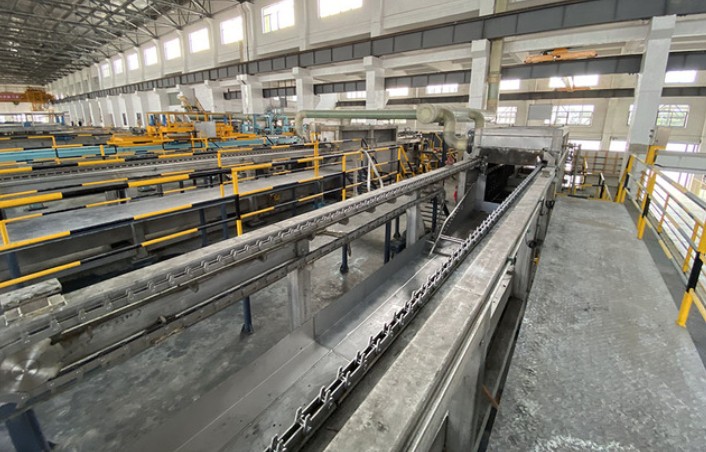
Specifically, in terms of waste gas treatment, the electrolytic process may produce acidic gases (such as sulfur dioxide, chlorine) and volatile organic compounds. To address this issue, an exhaust gas collection system can be installed, and the acidic gas can be neutralized by a scrubber, or organic matter can be adsorbed by activated carbon. At the same time, the electrolyte formula can be optimized to replace traditional harmful substances with more environmentally friendly additives, thereby reducing the generation of harmful gases.
In the wastewater treatment process, the electrolytic process will produce wastewater containing heavy metals and acidic substances. In this regard, the pH value of the wastewater can be adjusted to neutral by the neutralization precipitation method, which can cause heavy metals to precipitate, and then the solid waste can be separated by filtration or centrifugation. In addition, membrane separation technology (such as reverse osmosis) can also be considered to further purify water quality and realize water recycling, which can not only reduce wastewater discharge but also save water resources.
For solid waste, it is mainly anode mud and sediment after electrolysis. These substances may contain antimony and other heavy metals and need to be properly handled. Valuable metals can be recycled, such as extracting useful components through smelting or chemical treatment. For the remaining residue, if it is harmlessly treated, it can be used as building materials or other industrial raw materials to avoid environmental pollution caused by direct landfill.
In terms of energy consumption, the electrolysis process usually consumes a lot of electricity. The use of energy-saving equipment or optimization of process parameters (such as improving current efficiency and accurately controlling temperature) can effectively reduce energy consumption. At the same time, the use of renewable energy such as solar energy or wind energy to supply electricity can also help reduce carbon footprint.
In summary, the production of electrolytic antimony needs to start from multiple aspects such as waste gas, wastewater, solid waste treatment and energy consumption, and take targeted environmental protection measures to achieve green and sustainable production.