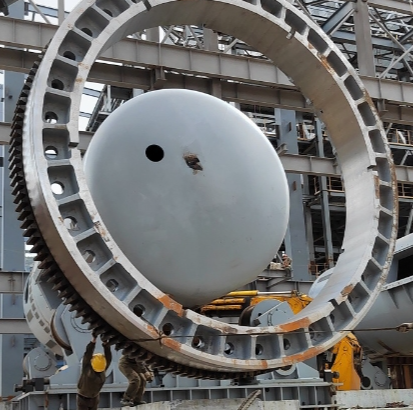
The copper anode furnace is the main equipment for fire refining, and fire refining is a common method for copper refining. Therefore, copper anode furnace plays an important role in copper refining. The raw materials for fire refining are mainly divided into copper ore and scrap copper. Traditional copper refining is roughly divided into three processes: fire refining-electrolysis-cathode remelting and ingot casting.
Copper and its alloys are one of the most widely used metal materials. Copper in nature mostly exists in the form of copper minerals. Copper minerals are aggregated with other minerals to form copper ore, and the mined copper ore is beneficiated to become copper concentrate with higher copper grade. Among them, brass, copper, etc. are the most widely used alloy materials among copper alloys. Brass is divided into simple brass and complex brass. Simple brass is mainly composed of copper and zinc, while complex brass is a multi-component alloy composed of a small amount of lead, tin, aluminum, manganese, etc. added to a copper-zinc alloy. During the smelting process of copper and copper alloys, gases and impurities will be brought in due to various reasons. If the gases and impurities in the melt are not removed, defects in the castings and even scraps will occur. The purification process to remove these harmful impurities is the refining process. Generally divided into two categories: fire refining and electrolytic purification. The method usually used is fire refining.
Fire refining is to put blister copper and purple copper into a refining furnace for melting, and then introduce air into the molten copper to cause impurities such as Zn, Fe, Pb, Sn, As, and S, which have a greater affinity for oxygen, to form Oxidation occurs in the form of oxides and reacts with the flux added into the furnace to form slag on the surface of the molten copper, or volatilizes into the furnace gas and is removed. The oxygen remaining in the copper liquid is reduced and removed to form an anode plate for electrolytic refining. Therefore, copper fire refining can be divided into an oxidation stage and a reduction stage, and oxidation reactions and reduction reactions occur all the time in the anode furnace.