



NEWS&EVENTS
Home > News&Events > Company news > Selection of refractory castables for rectangular aluminum melting furnace
Different from circular furnaces, rectangular aluminum melting furnaces are favored by manufacturers because they do not require opening the cover and removing slag, have high workshop utilization rates, and require less investment in plant infrastructure. Refractory castables are used to construct industrial furnace linings. Therefore, in order to extend the service life of the furnace, appropriate castables must be selected in the early stages of furnace construction.
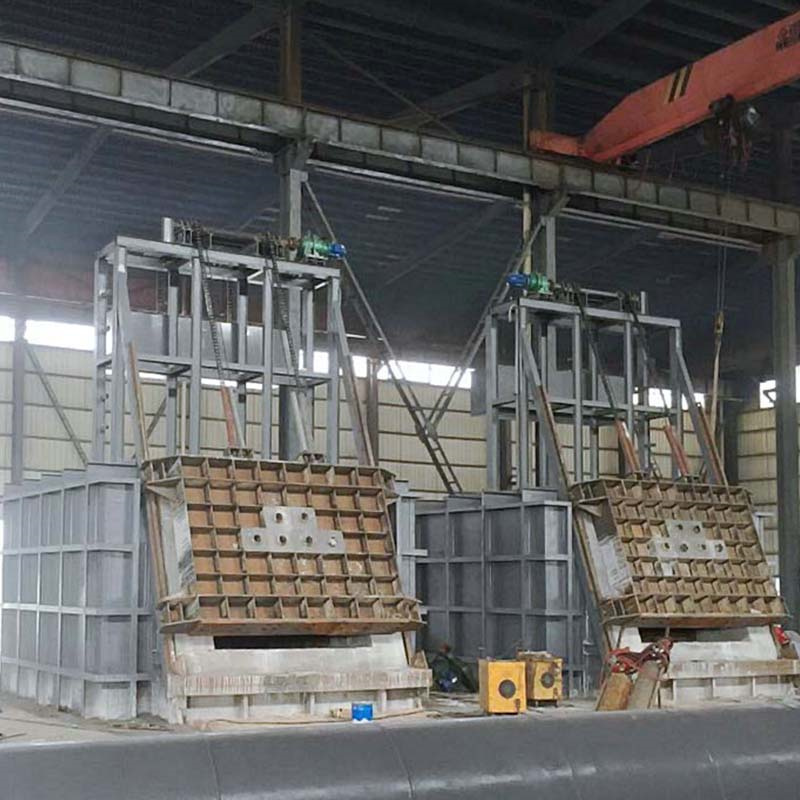
Analysis from the perspective of the furnace: The selection of castables must not only meet the temperature and environmental requirements of each part of the rectangular furnace (furnace roof, furnace wall, furnace door, etc.), but also prevent the strong activity and permeability of the aluminum solution. The furnace top is divided into an insulation layer and a working layer. The working layer is in direct contact with the flame and has a high temperature. The insulation layer prevents excessive heat loss. Therefore, the working layer is mainly made of heavy castables, and the insulation layer is made of light insulation castables. host. The furnace door is the part where raw materials come in and out, and there will be regular friction. In order to prevent damage to the furnace door caused by friction and flames, lightweight insulating castables and high-strength wear-resistant castables are mainly used.
From the performance analysis of the castable itself, it is divided into: acidic, alkaline and neutral castables; according to density, it is divided into heavy castable and light castable; according to material, it is divided into aluminum silicate, magnesium, magnesium chromium and corundum. Quality casting, silicon, etc. It is necessary to consider the kiln environment, use location, use temperature, and corrosion properties to select appropriate refractory castables. Generally speaking, clay castables are used below 1200°C, high-aluminum castables are used between 1300°C and 1400°C, and corundum castables are used if the temperature exceeds 1450°C.
In addition to the above, economic costs must also be considered. Only by selecting the most suitable castables for rectangular aluminum melting furnaces and factory buildings can we achieve economical and practical results.