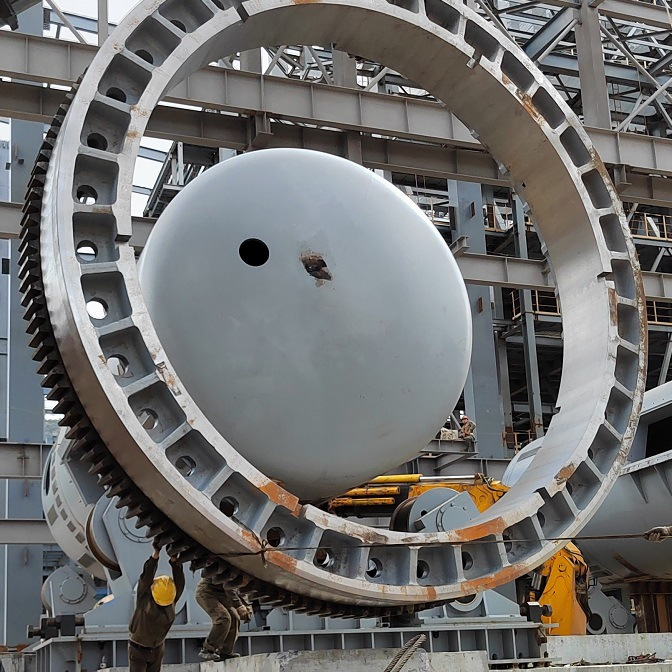
The traditional matte-making smelting process includes blast furnace, reverberatory furnace and electric furnace smelting. The degree of oxidative desulfurization is very low. Air is used as the oxidant to generate low-grade matte. A small part of the heat required for melting uses the oxidation reaction heat, and most of it requires additional heating. The amount of flue gas generated is large and the SO2 concentration is low, which is not conducive to acid production [3]. The main matte-making smelting processes currently used by copper smelters in the world are flash smelting and bath smelting. In the flash smelting process, the dried copper concentrate is fully mixed with the flux and sprayed into the furnace together with oxygen-rich air through the concentrate nozzle. In a high-temperature environment, the suspended copper concentrate quickly completes physical and chemical reactions, and the generated matte and slag fall into the sedimentation tank for clarification and separation. In the molten pool smelting process, the concentrate is thrown to the surface of the melt or sprayed into the melt. Oxygen and nitrogen are usually injected into the molten pool to stir the molten pool vigorously, and the concentrate particles are surrounded by liquid and melt rapidly. This generates most of the heat required to maintain the smelting operation, allowing mass transfer between the oxygen-containing bubbles and the solution surrounding the copper/iron sulfide. The molten pool melting method can be divided into three types: top blowing, side blowing and bottom blowing according to the different blast positions.