



NEWS&EVENTS
Home > News&Events > Company news > Which types of copper raw materials are suitable for electrolytic cell technology?
Electrolytic cell technology is widely used in copper smelting and recycling, capable of processing various types of copper raw materials and demonstrating strong adaptability and resource utilization advantages.
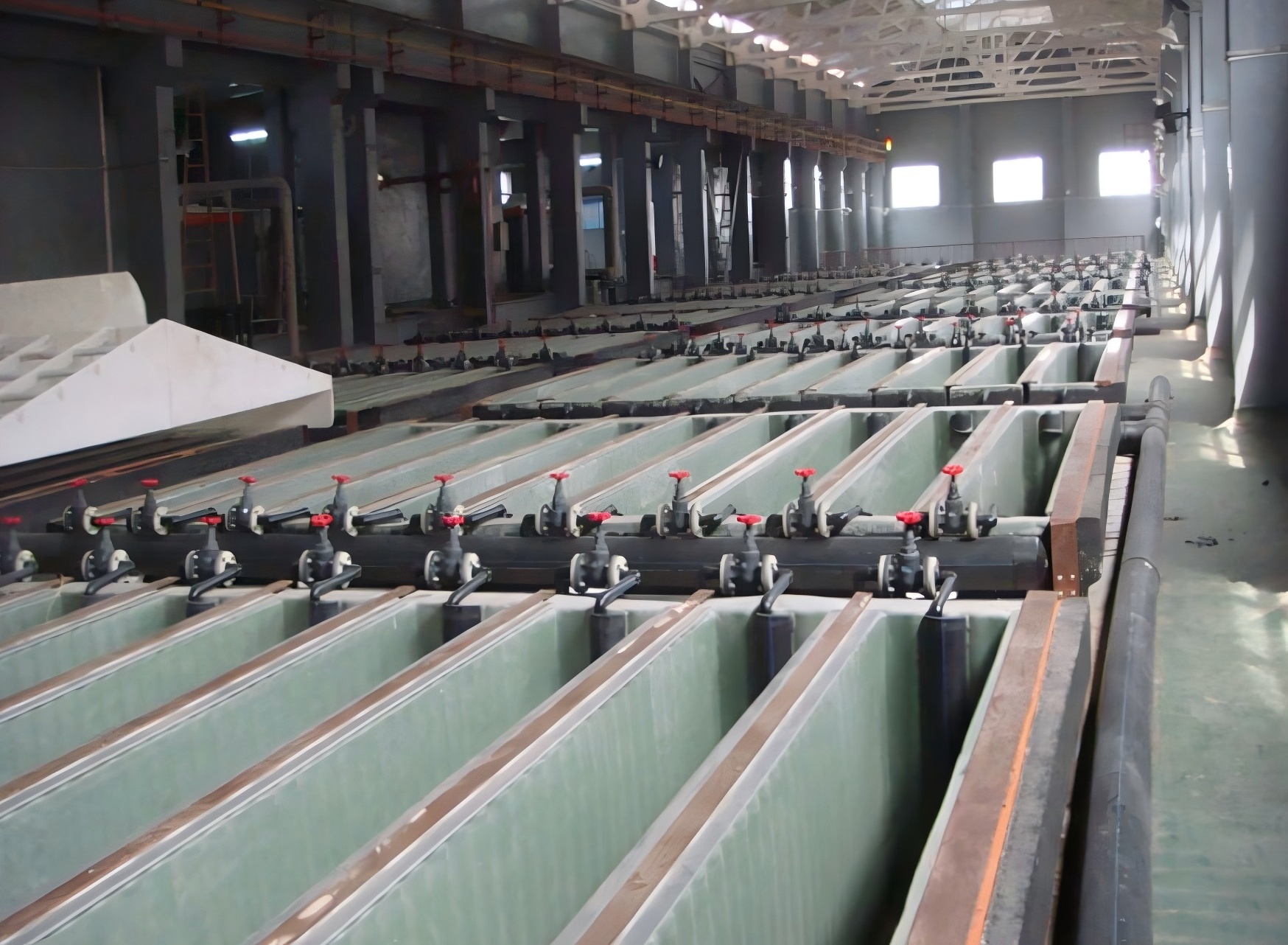
Crude copper is one of the common raw materials processed by electrolytic cell technology. Crude copper typically contains various impurities, such as iron, zinc, nickel, and lead. Through electrolytic cell refining, under the action of direct current, crude copper, acting as the anode, gradually dissolves, while pure copper is deposited at the cathode. Impurities enter the anode mud or electrolyte, resulting in high-purity cathode copper that meets the stringent purity requirements of the electronics and electrical industries.
Scrap copper is also an ideal processing target for electrolytic cell technology. With the widespread use of copper products, a large amount of scrap copper is generated, such as waste wires and cables, and copper alloy parts. This scrap copper has diverse sources and complex compositions. Electrolytic cell technology can efficiently recycle and reuse it, not only reducing dependence on primary copper mines and lowering mining costs and environmental pressure, but also achieving resource recycling.
Low-grade copper ore is also suitable for processing using electrolytic cell technology. For copper ores with low copper content that are difficult to utilize directly through traditional pyrometallurgical processes, copper can first be leached from the ore using hydrometallurgical methods to obtain a copper-containing solution. Then, copper can be deposited from this solution using electrolytic cell technology, thus increasing the development and utilization value of low-grade copper ores.
Furthermore, electrolytic cell technology is particularly suitable for recovering copper from electronic waste. Electronic waste contains a large amount of copper, such as printed circuit boards. Through specific pretreatment and electrolysis processes, copper can be precisely separated and recovered from other metals, resulting in high resource utilization rates. This effectively solves the problem of electronic waste disposal and promotes the sustainable use of resources.