



NEWS&EVENTS
Home > News&Events > Company news > Damage and Maintenance Strategies for Rotary Copper Smelting Furnace Linings
The refractory lining of rotary copper smelting furnaces is constantly subjected to multiple severe challenges during the smelting process, including high-temperature molten metal erosion, complex chemical corrosion, and intense thermal stress. Its lifespan directly impacts production safety, cost, and efficiency. To achieve a long and efficient service life for the furnace lining, it is essential to deeply understand its failure mechanisms and select appropriate materials and maintenance strategies for different working areas.
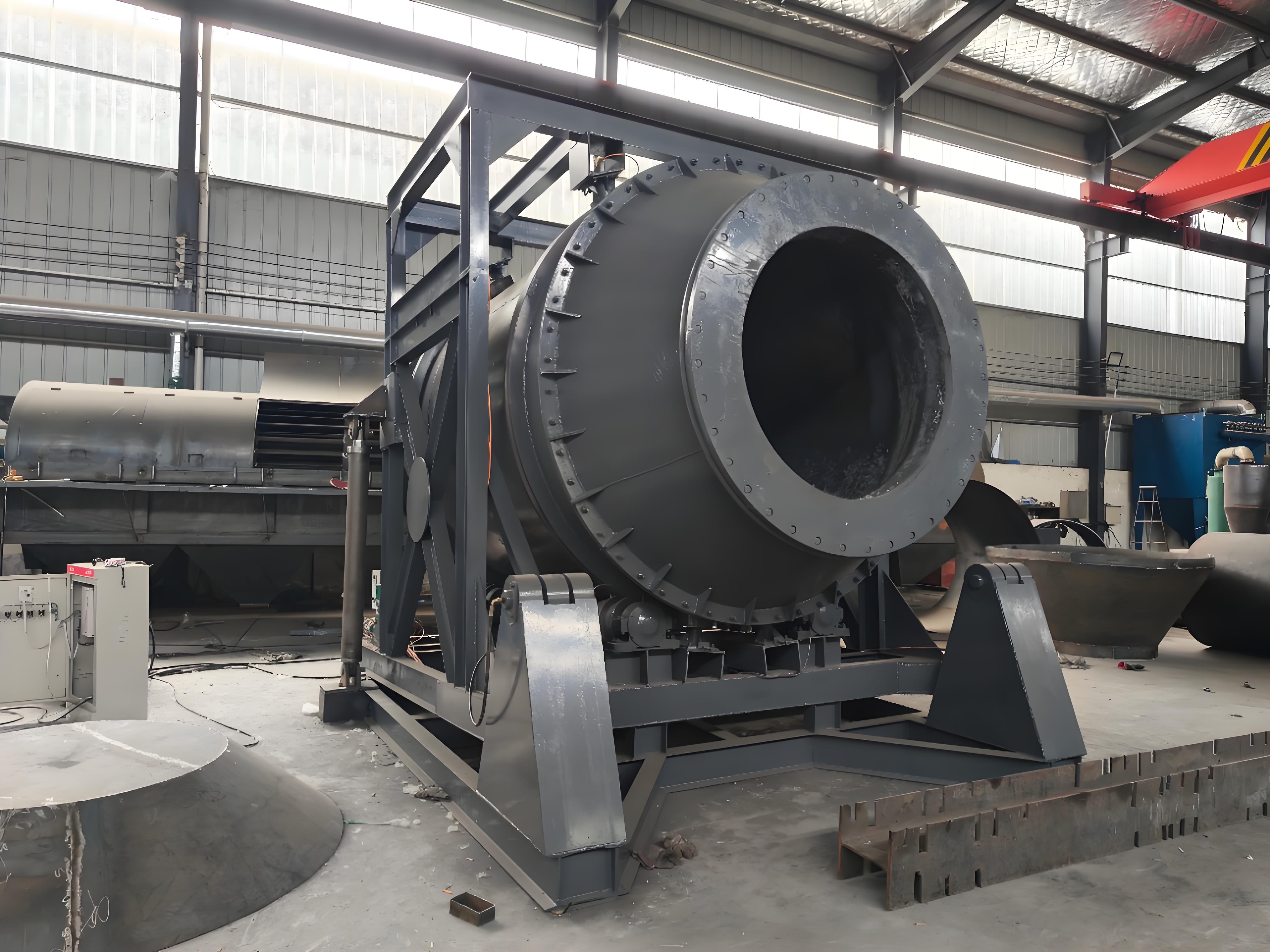
Lining failure is the result of the synergistic effect of multiple factors. Chemical corrosion is the core factor; alkaline slag, sulfides, and lead-zinc oxides penetrate into the brick structure, causing deterioration and structural spalling. Continuous mechanical erosion by the high-temperature molten metal accelerates material wear. Frequent furnace start-ups and shutdowns or temperature fluctuations cause thermal stress, leading to cracks in the lining and further exacerbating the damage.
The selection of refractory materials must be precisely matched to the characteristics of different areas. In the most severely damaged molten pool area, which is in direct contact with copper matte and slag, magnesium-chrome bricks with excellent corrosion resistance, or the more environmentally friendly magnesium-aluminum spinel bricks, should be the first choice. In the transition zone (especially near the slag line), where thermal stress and chemical corrosion alternate, composite masonry or high-density pre-reacted bricks are often used to resist penetration and spalling. In the flue gas area, the temperature is relatively lower, but it faces erosion from dust-laden flue gas and corrosion from acidic gases; high-alumina bricks or silicon carbide bricks are more economical and reliable choices.
A scientific maintenance strategy is another pillar for extending the furnace lining's lifespan. This includes: establishing a system for regular temperature and thickness monitoring, using thermal imaging technology to predict damage; using specialized spraying materials for rapid hot or cold repair of localized erosion; and optimizing process operations to stabilize slag type and temperature, thereby reducing corrosion at the source. In addition, leaving reasonable expansion joints during construction and using staggered interlocking structures are crucial for ensuring overall stability.
Looking ahead, furnace lining technology is developing towards a more intelligent and environmentally friendly direction. The research and application of chromium-free refractory materials are becoming increasingly mature, and intelligent sensors and lifespan prediction models are enabling a shift from "reactive maintenance" to "proactive prevention." Only through the deep integration of materials science, monitoring technology, and process optimization can we build a solid foundation for the efficient and stable operation of rotary copper smelting furnaces.